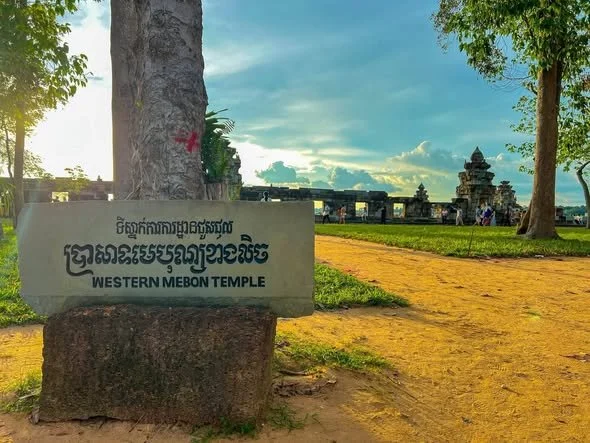
The Mystery of West Mebon
The Temple in the Middle of the West Baray
In the middle of the West Baray, on a small island, sits a temple that very few visitors have ever seen. Now, after years of restoration, West Mebon is opening its doors again. And we think it is one of the most special places in all of Angkor.
On Monday, our co-owner Katrine was invited by Artisans d'Angkor to visit West Mebon before its official handover. Artisans d'Angkor is one of the ethical partners we have always recommended to our guests, so this invitation meant a lot to us. "I was deeply honoured," Katrine says. "It was a truly humbling experience to stand there and see history brought back to life."
She spent the morning on the island and came back full of stories. "The more I was there, the more I realised this place has so much wonder."
Where the story begins
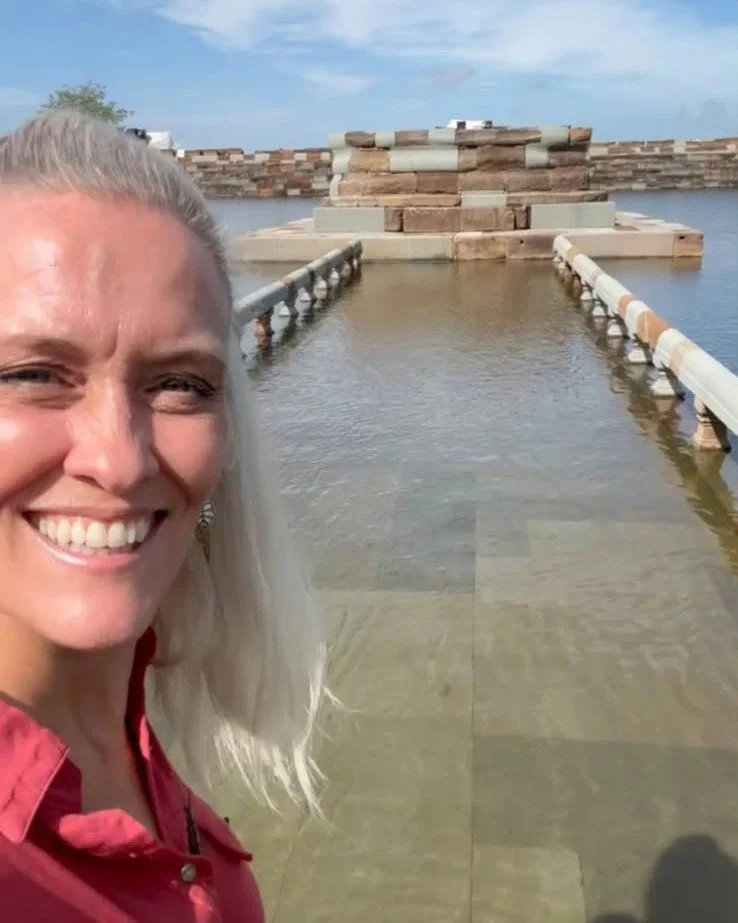
Behind Katrine is the centre of West Mebon, where the bronze Vishnu was found in 1936 and where the mysterious 10-metre pole once stood.
After almost two decades in hospitality in Siem Reap, we thought we knew Angkor quite well. Then Katrine came back from West Mebon with stories we had never heard before.
The West Baray is a reservoir built by the Khmer kings about 1,000 years ago. It is around 8 km long and 2 km wide. It was one of the largest man-made reservoirs of the ancient world.
You only understand the size when you stand on the bank. It is extremely impressive. We are honestly surprised it has not been more touristy until now.
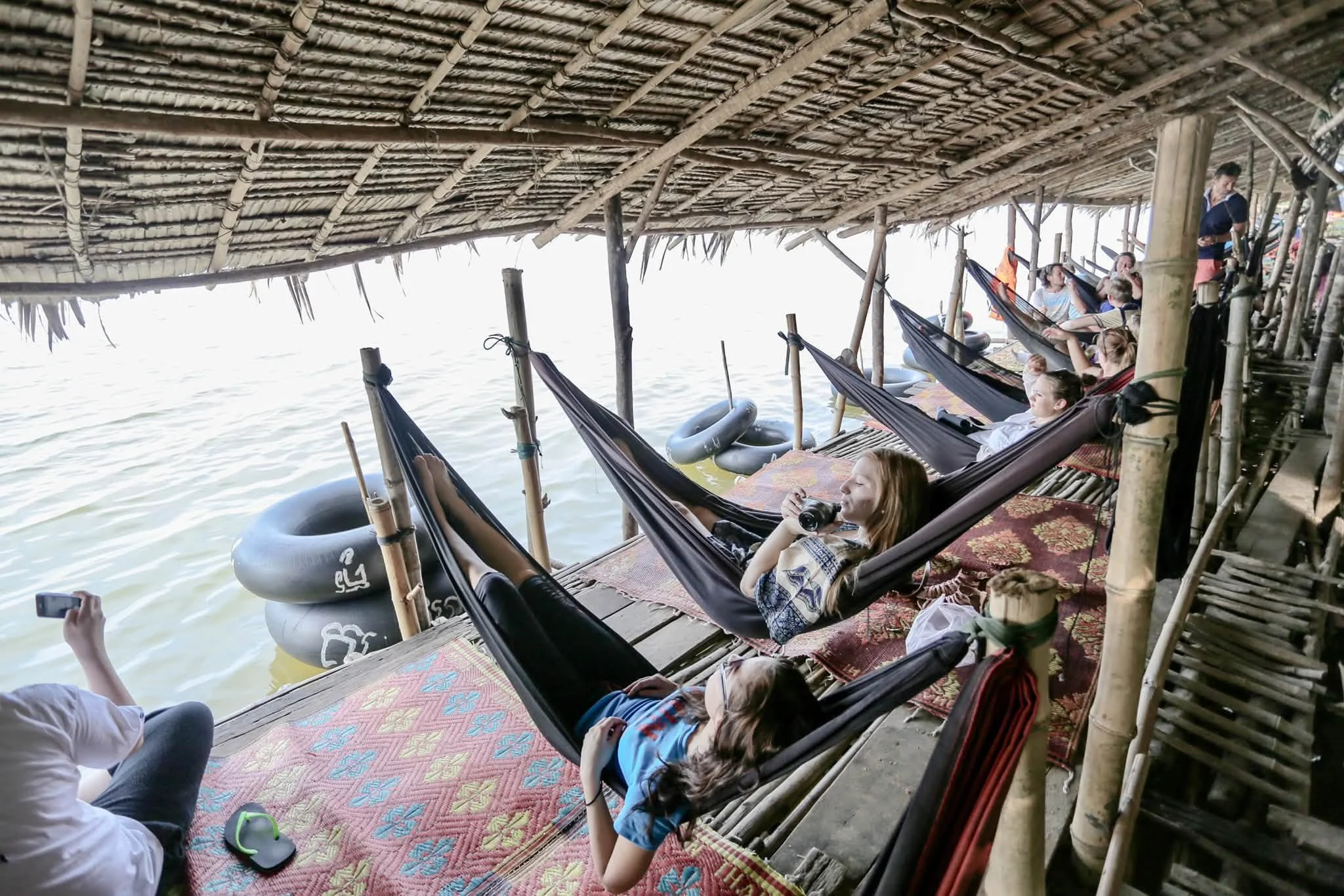
For years we have told our guests to do what the locals do. Go out to the West Baray, buy some local food, and relax in a hammock in the huts by the water. Every guest who has gone, has loved it.
The dream of 1936 and the giant bronze Vishnu
It's a well-known local legend. In 1936, a local villager woke up from a dream. In the dream, the Buddha told him he was trapped under stones and mud in the middle of the West Baray.
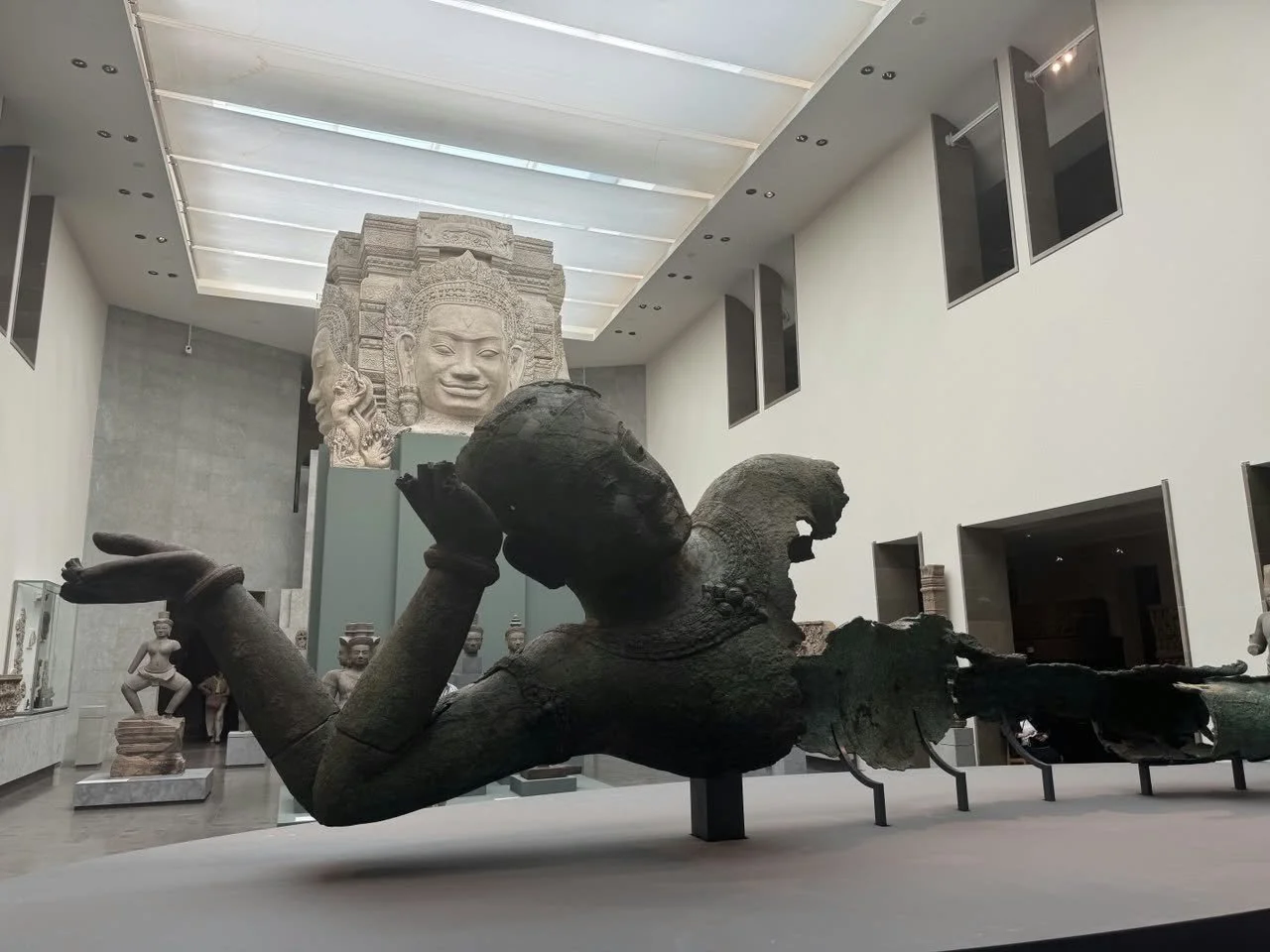
The villager went to the French archaeologists and told them to dig in the center of the temple. They did. Not far under the surface they found pieces of a huge bronze statue. It was not the Buddha, but a reclining Vishnu, the Hindu god resting on the cosmic ocean.
The complete statue was more than five meter long. It is the largest ancient bronze ever found in Cambodia. And it was hollow.
Katrine is not an expert, but the experts on Monday explained why that matters. Casting a hollow bronze this big is very difficult. You need to know the right temperature, how much metal to pour, how to build the molds. It is very advanced work for the 11th century.
The statue belongs to the National Museum of Cambodia. Its surviving parts (the head, shoulders and two arms) have travelled to France and the United States for study and exhibition. Right now it is on a world tour, and until January 2027 you can see it at the Asian Art Museum in San Francisco.
A temple built around water
West Mebon sits on an island in the middle of the reservoir. It was built in the mid-11th century, and is linked to King Udayadityavarman II. The West Baray itself was likely started by King Suryavarman I before him, and later kings made their own changes.
When Katrine came back from the island on Monday, she could not stop talking about it.
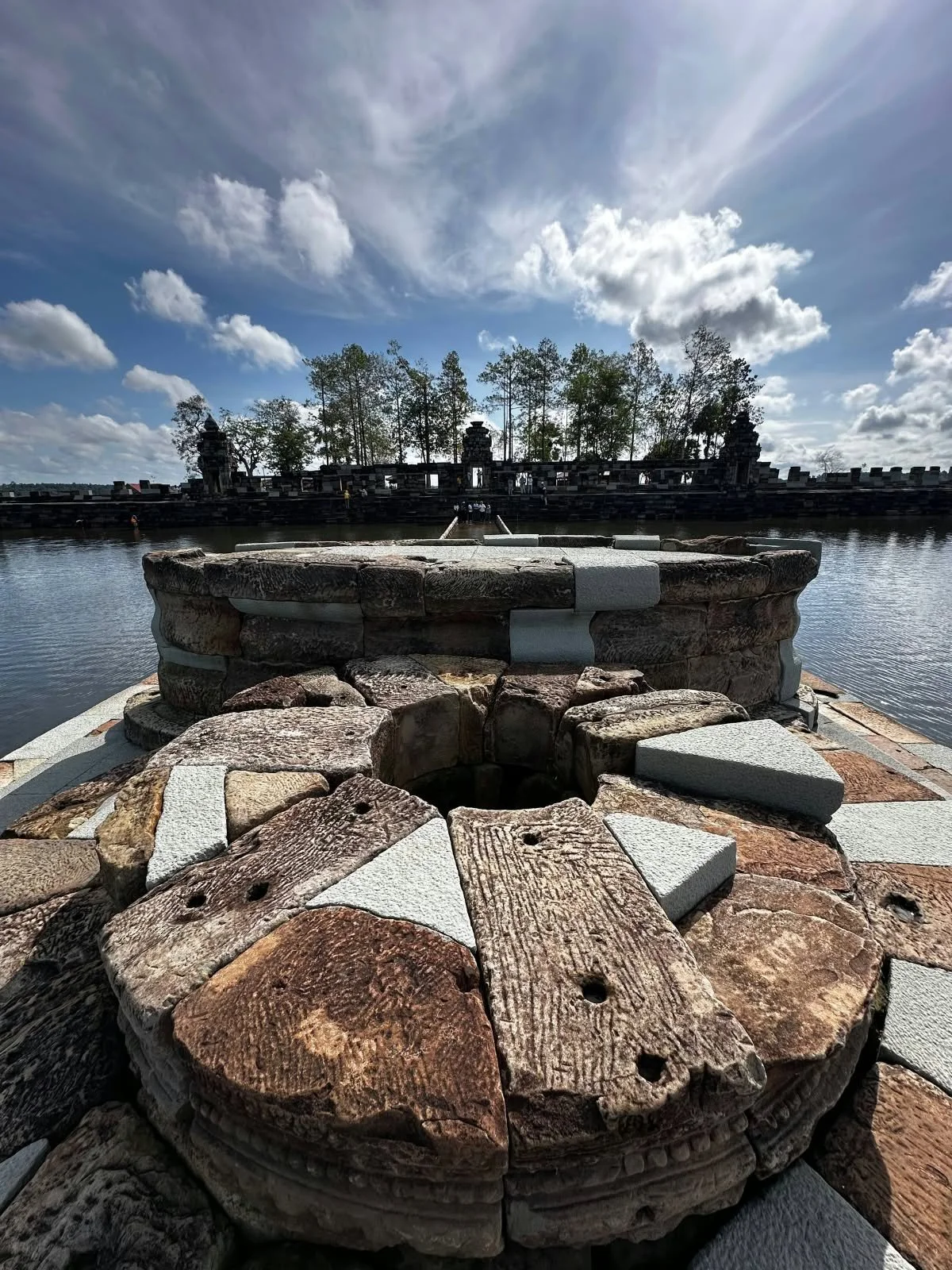
Right in the middle of the island stands an incredible stone structure. Archaeologists found stones here from a giant pole, around 10 meters tall. All the parts are now on display on the island, so you can see them with your own eyes. "It's unbelievable," Katrine said. Nobody knows the full story yet, but the experts believe it worked like an ancient "thermometer": a gauge to measure and control the water levels across the whole temple park.
Then she told us that the temple is almost exactly 100 by 100 meters. Think about that! It was built in the 11th century, and the meter was invented in the 1790s, about 750 years later.
And everything here is about water. The giant Vishnu lay at the heart of the temple, close to the water. Some researchers even think the water reached the statue when the reservoir was high.
"This looks like it could be one of the most holy and important parts of the whole temple park," Katrine told us. When you put it all together, it is easy to see why. Water was life for Angkor, and this temple sat right in the middle of it.
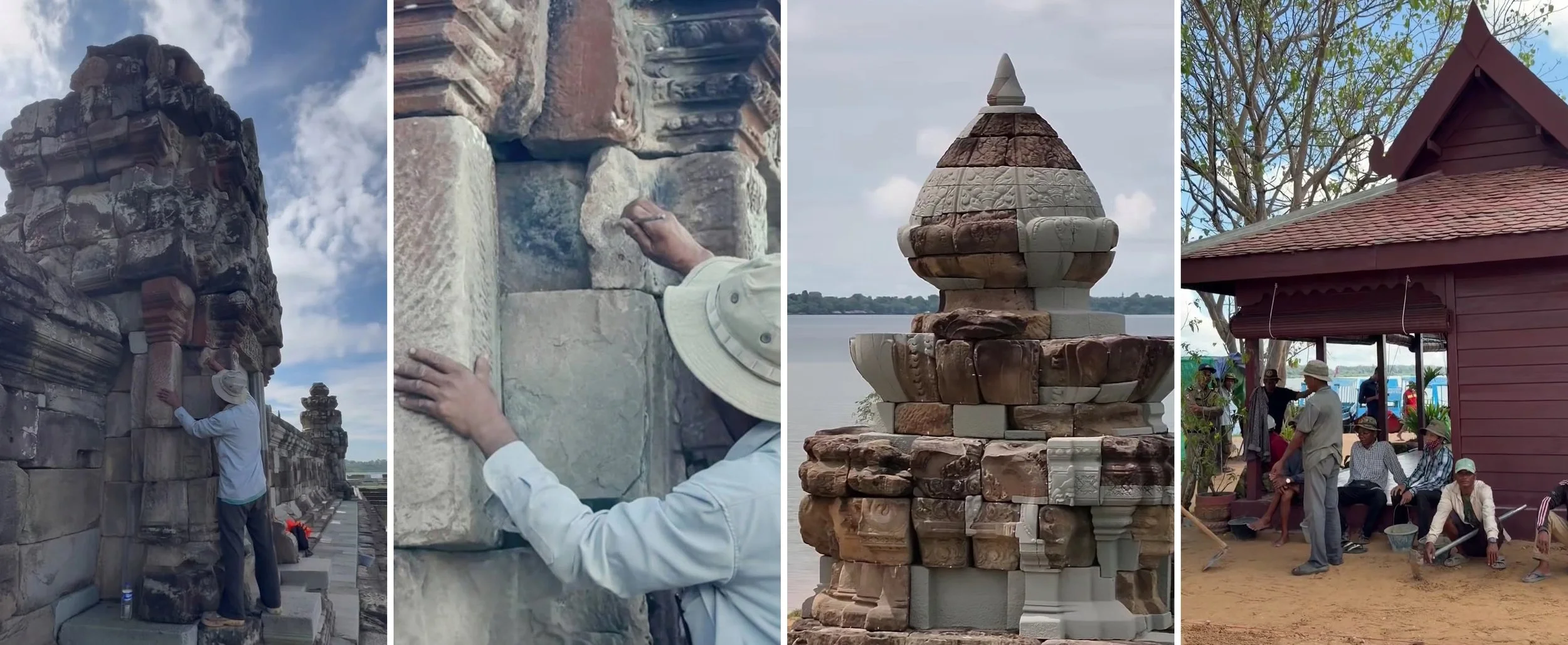
The restoration started in 2012. It was led by Cambodia's APSARA National Authority, funded by the French government, and supported by the French School of Asian Studies (EFEO). Artisans d'Angkor trained craftspeople for the project, and its craftsmen have worked on the island alongside master stone carvers and archaeologists.
When Katrine visited, the Artisans d'Angkor craftsmen were still on site, working hard to finish the last carvings. Soon the temple will be officially handed over to His Majesty the King of Cambodia and President Emmanuel Macron of France.
This is big news for Siem Reap!
A lost temple, a legendary dream, a giant bronze Vishnu. Stories like this travel fast, and we think the world is about to fall in love with West Mebon.
We feel like we have already seen it starting. The same day Katrine came back from West Mebon, she told the story to a group from India staying with us. They were so amazed that they changed their plans. After their trip to Koh Rong, they are coming back to Siem Reap for an extra day and night, just to visit West Mebon. Another family staying with us, from Switzerland, jumped on their rented motorbikes and went out to see it for themselves.
What will happen now..?
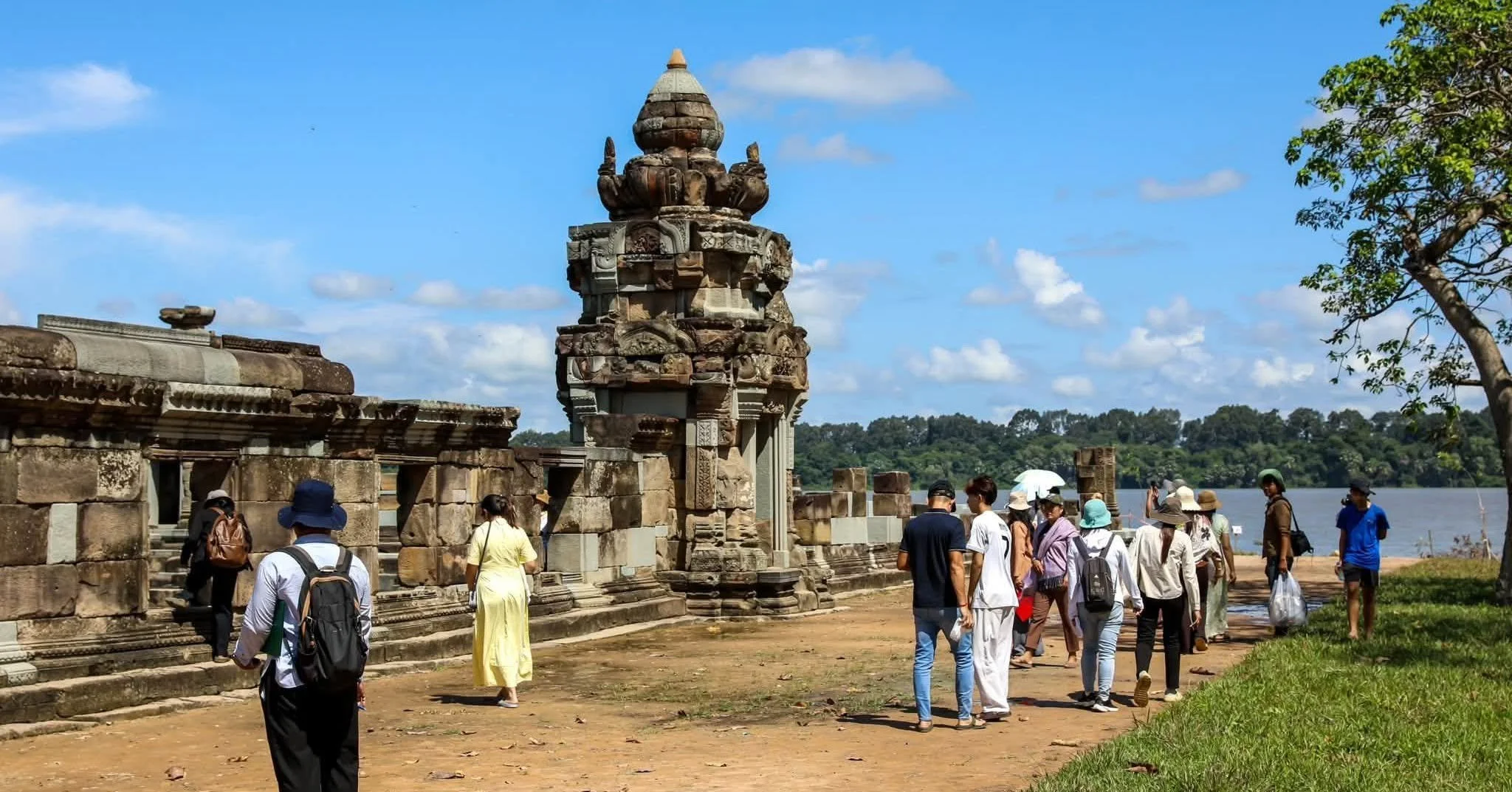
Cambodian visitors will be there first, we are sure. This is their own culture and heritage, and nobody understands its meaning better than the locals. International travellers who love culture and history will also find it an amazing addition to the rest of the temple park.
The temple opens officially to visitors in November 2026. The restoration took about 14 years, and the temple is now strong enough to stand for another 100 years. Right now the APSARA National Authority is cleaning the site and getting it ready for visitors.
You cross the water by boat. You walk the old stone causeway. And then you are standing in the middle of the largest lake in Angkor, in a temple that was once lost in the mud. Come at sunrise or sunset, when the water turns gold.
Come before the rest of the world finds out. Because they will.