The Most Responsible Hotel in Cambodia?
We'll Let You Decide.

Cambodia's first Eco-Shop and Refill Station — because responsible tourism starts with the small decisions
After more than a decade of running Babel Guesthouse in Siem Reap — and since November 2023, our intimate Babel Boutique Hotel — we have learned that responsible tourism is not something you achieve. It is something you keep working at, every single day, with the people around you.
So let us tell you what responsible tourism actually looks like at Babel — not in principles, but in practice.
It started with a leap of faith.
Katrine first came to Siem Reap in 2007 to run a different guesthouse for a year. She called Simen in Norway and said: come and help. He came, and they stayed.
By 2011, the already well-established Babel Guesthouse — opened in 2008 by a trio of European owners: Italian, French, and Spanish — was available for sale. The name "Babel" was already there, a perfect reflection of the multilingual, multicultural spirit the place was built on. Katrine and Simen kept the name, kept the spirit, and built something new on top of it.
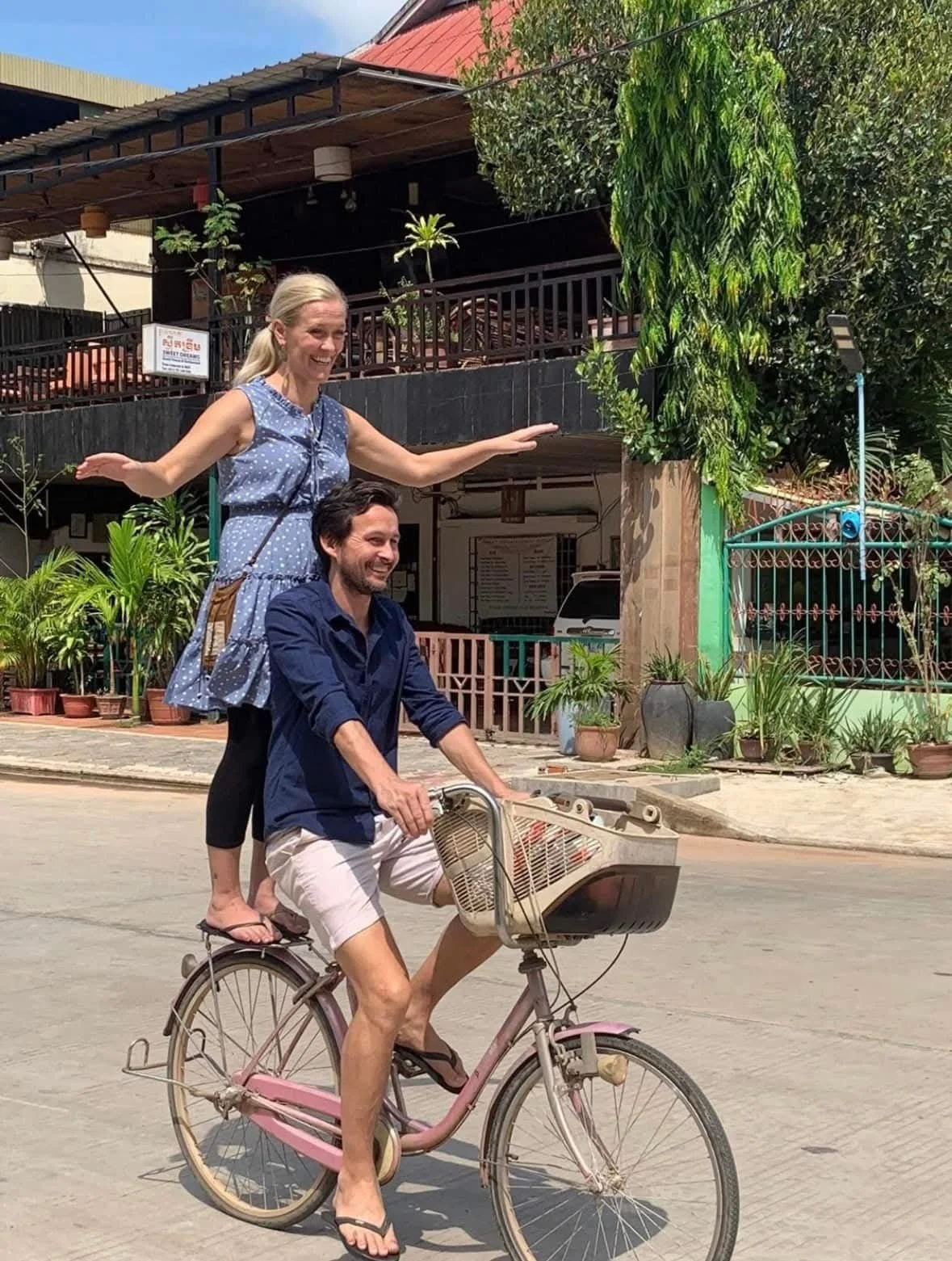
Katrine and Simen on the Babel road — the street where it all began
I know this story well — I arrived to Siem Reap around the same time as Katrine. And when Katrine and Simen took over Babel, I was running the European guesthouse on the very same street. Wat Bo Road was a different place back then. Quieter. Smaller. And a lot dusteier. A handful of guesthouses, no fancy hotels, a few tuk tuks, and a community of expats who had all arrived for one year and somehow never left.
That is Siem Reap for you.
What responsible tourism actually looks like at Babel?
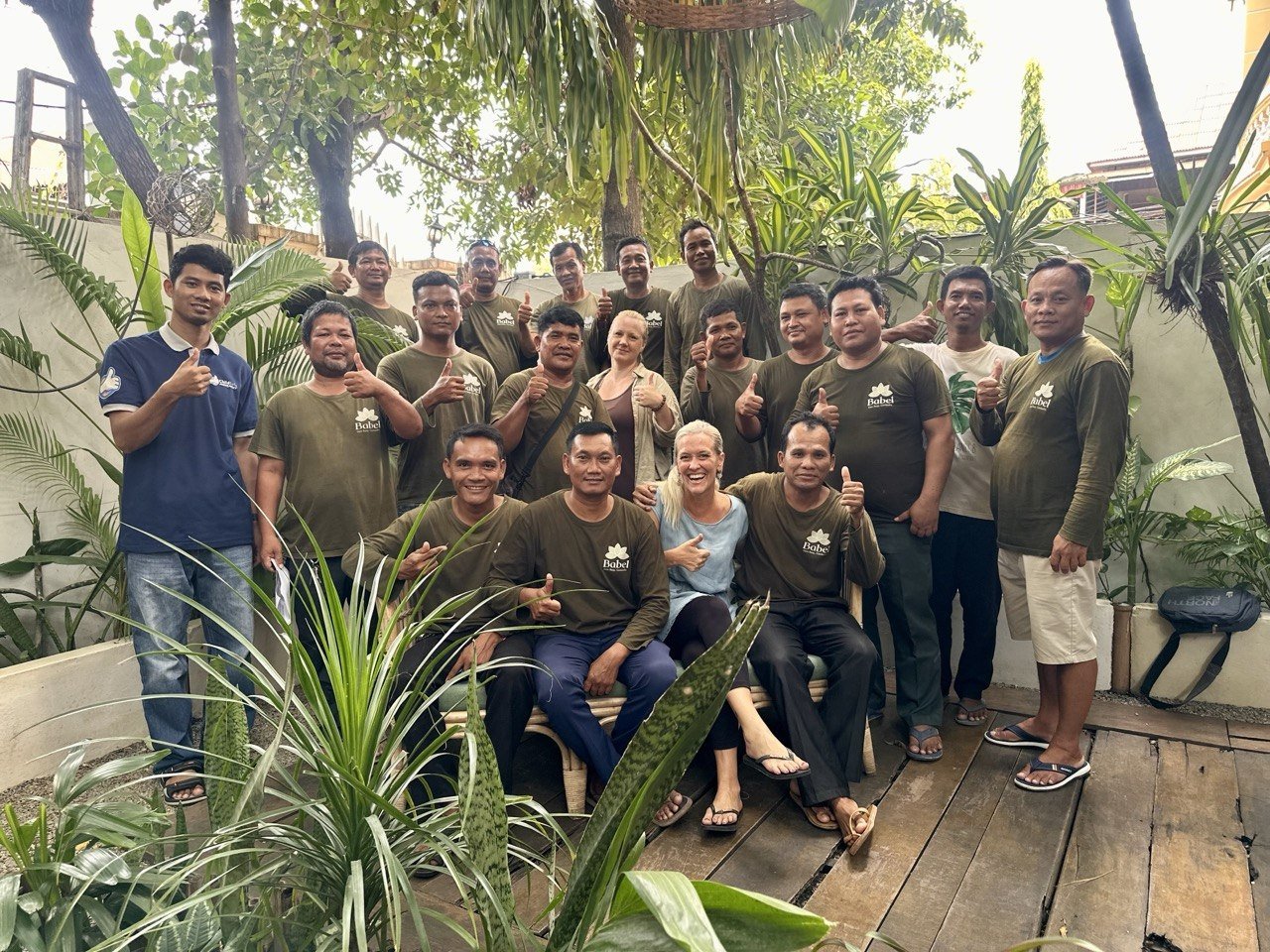
Our tuk tuk drivers — ChildSafe certified, fairly paid, and part of the Babel family for years
Responsible tourism was not a marketing strategy for Katrine and Simen. It was just the only way they wanted to do business.
Every member of our team — from the kitchen and housekeeping staff, to the front desk and our tuk tuk drivers — earns a fair wage. We do not pay the minimum and call it ethical. We pay what we believe is right, and we have been doing so since the beginning.
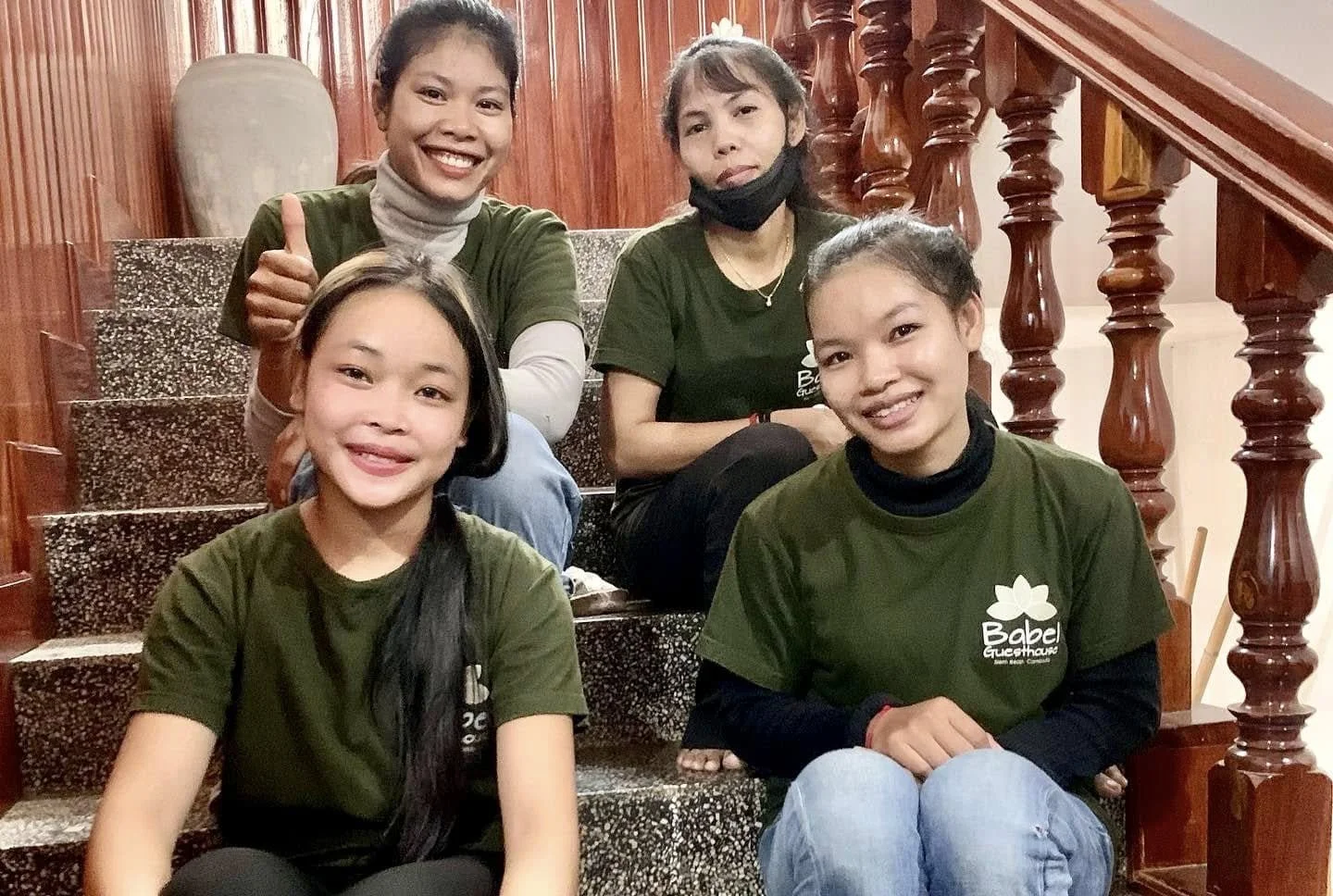
Our housekeeping team — the heart of Babel, and always the happiest faces in the building
But it goes further than wages. We believe in flexibility — something our staff genuinely appreciate in their daily lives. Things happen, families need help, life does not always follow a schedule. We understand that. We are a team, and we make it work together.
We also run an ongoing education programme for our staff and tuk tuk drivers — English lessons and skills workshops.
We have funded scholarships for team members to continue their education. Some of the people who started with Babel as young trainees have grown into senior staff members who have been with us for over a decade.
Then there is The Solhaug Fund.
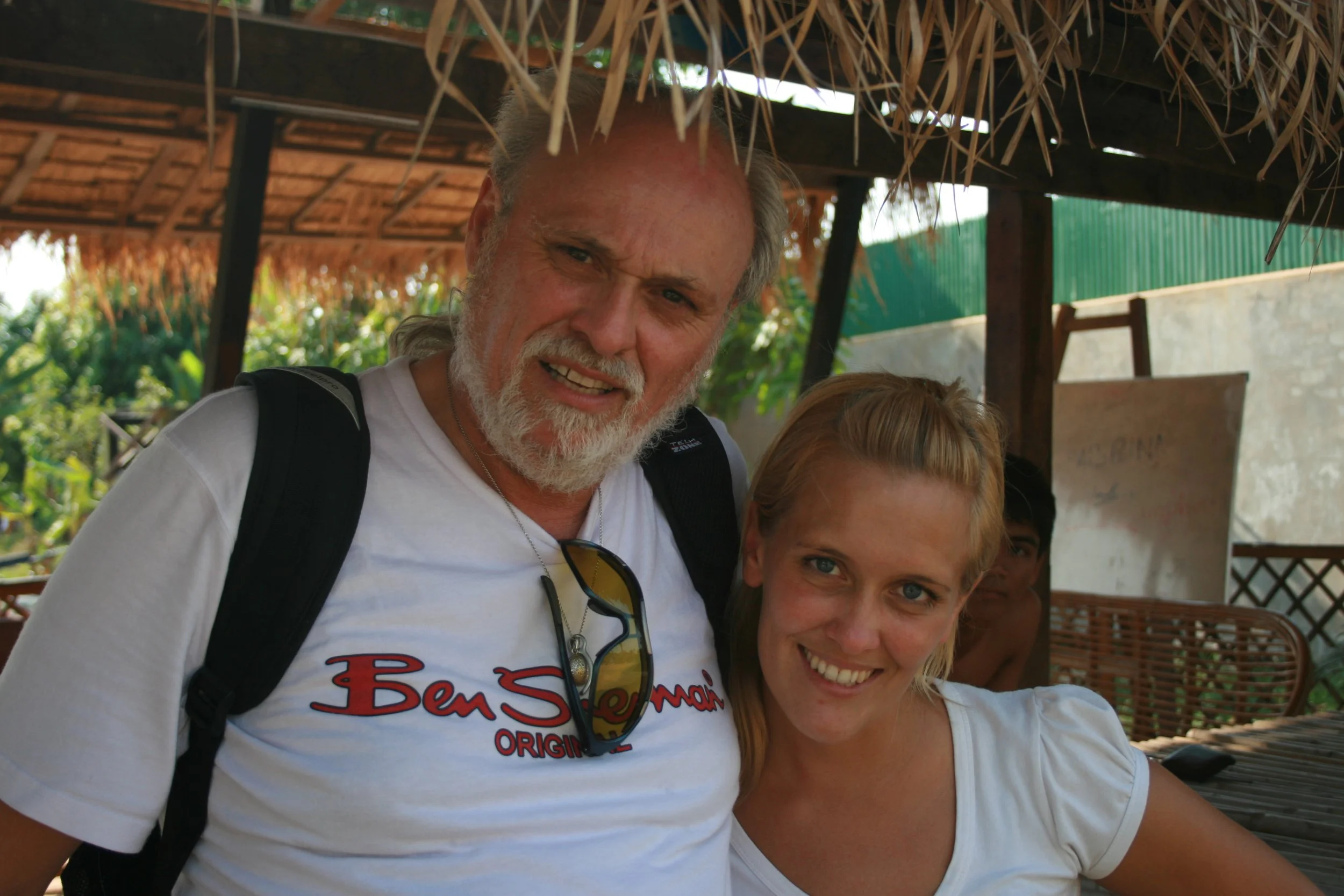
Katrine and her father John-Daniel Solhaug — the duo behind the fund that still changes lives today
The Solhaug Fund has a lovely origin story. In 2010, John-Daniel Solhaug — Katrine's father — turned 60. Instead of receiving birthday gifts, he asked his friends and family to donate to Cambodia instead. The fund was born from that single generous gesture, and it has been quietly running ever since.
It primarily supports our own staff — helping with scholarships, higher education, emergency medical care, and opportunities that would otherwise be out of reach. Beyond that, a small number of carefully chosen projects that share our values also receive support — including The Lake Clinic, which serves communities living on the Tonle Sap lake, and Naga Earth's first hard plastic recycling machine in Cambodia, among others.
ChildSafe — since 2011
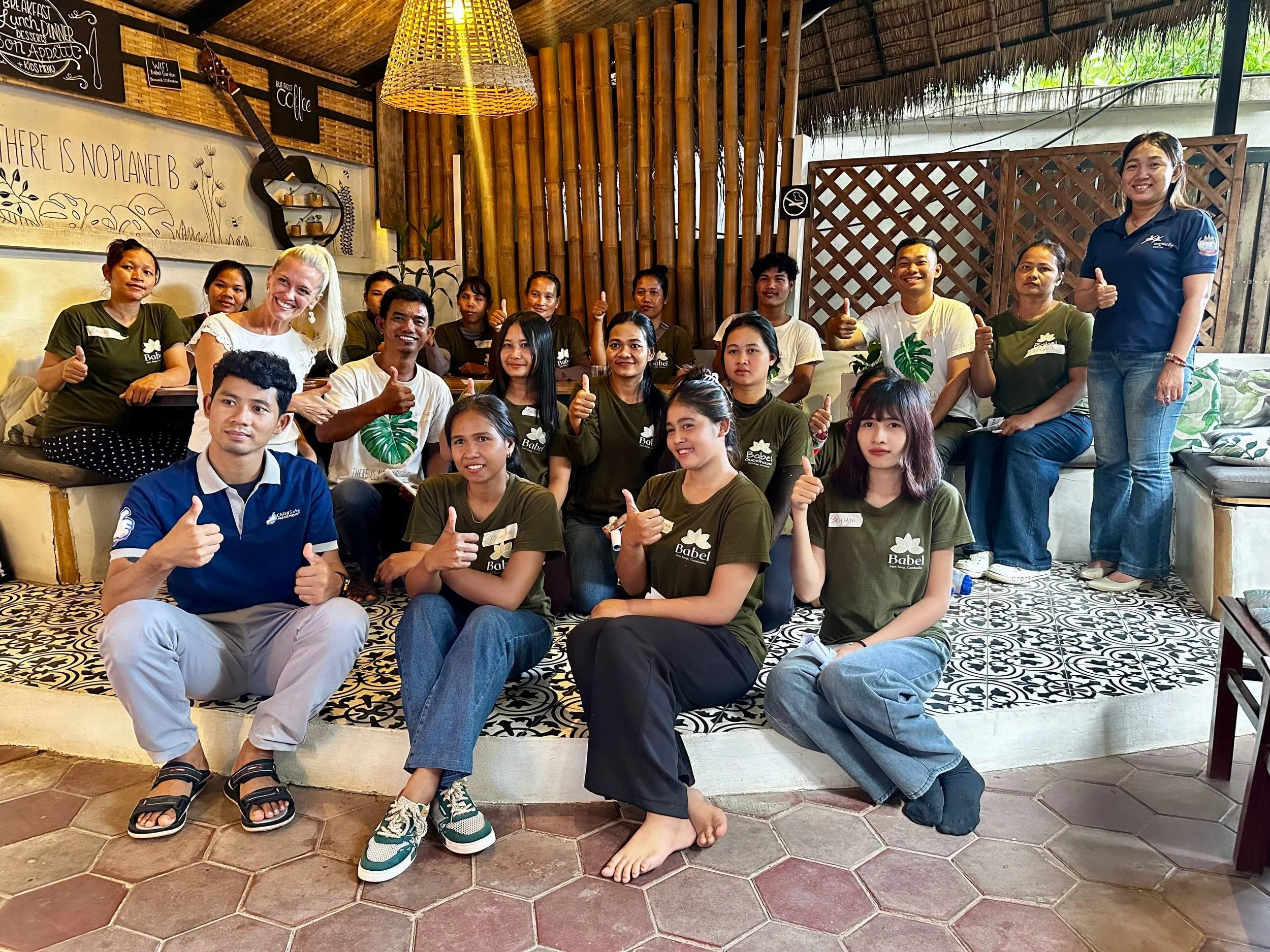
ChildSafe training earlier this year — every member of the Babel team joins, from housekeeping and night guards to reception staff. Even those on maternity leave made it along
Babel has been ChildSafe certified since we took over. Every single one of our tuk tuk drivers holds a ChildSafe certification — meaning they are trained to recognise and report child exploitation, and to never be complicit in it. In a country still recovering from the trauma of the Khmer Rouge era, this matters enormously.
We also actively promote the ChildSafe message to our guests — because responsible tourism in Cambodia means understanding the realities of child vulnerability here, and choosing not to look the other way.
The environment — beyond the bamboo straw

13,000 plastic straws saved — and counting. But that is just the beginning.
Yes, we eliminated plastic straws — over 13,000 of them saved so far. But that is the easy part.
We partner with GAEA to turn our empty glass bottles into sand — part of Cambodia's first glass-to-sand recycling project. We send our soft plastics to HUSK Cambodia, which uses them to build school walls and housing. We return beer and kefir bottles directly to suppliers for reuse. We run community clean-ups in our neighbourhood. We planted trees near the Angkor temples. We operate Cambodia's first Eco-Shop and Refill Station, where guests can refill containers instead of buying new plastic.
We are not perfect. But we are genuinely trying, and we keep finding new ways to do better.
Supporting ethical restaurants and experiences
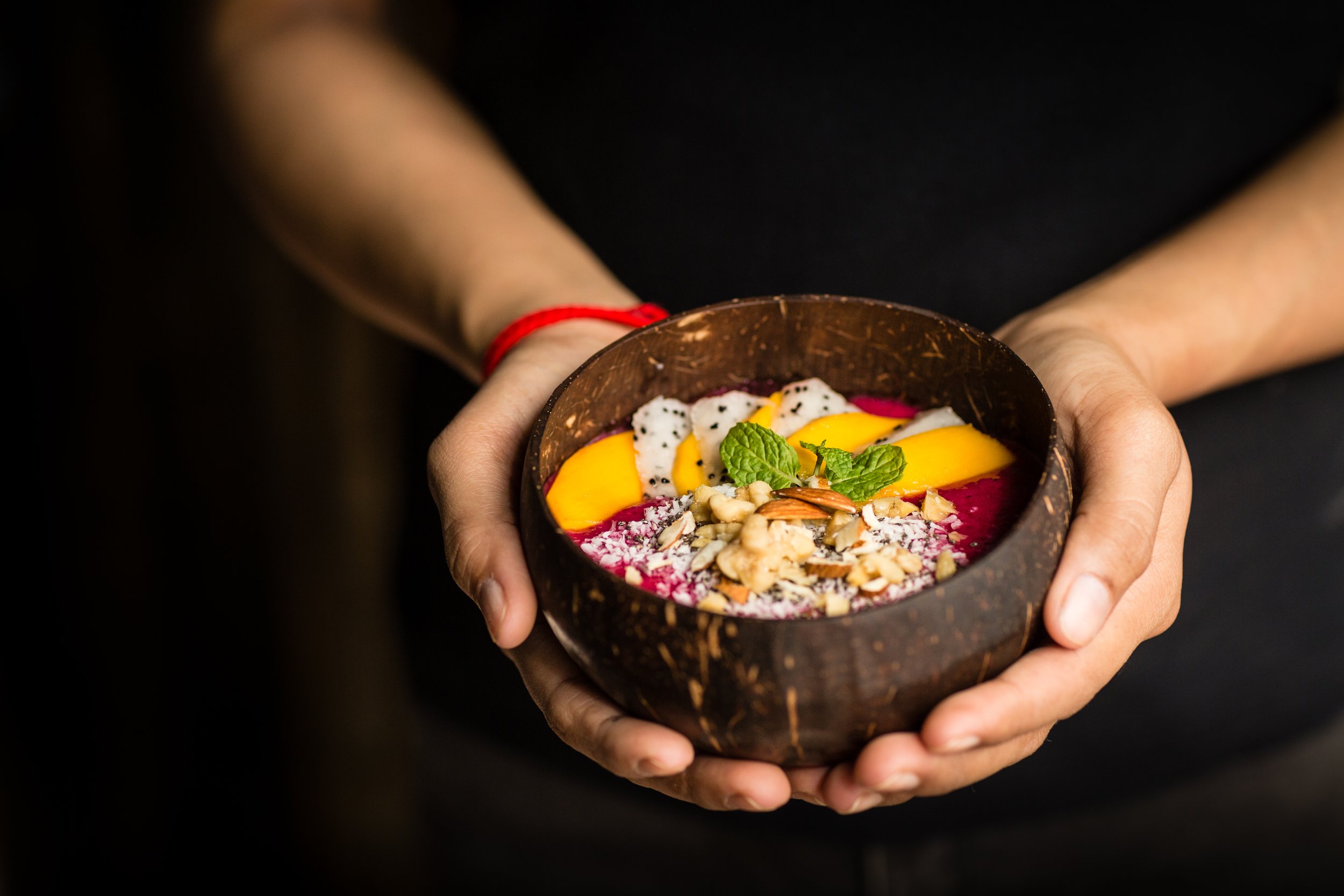
Every restaurant and café we recommend comes with a story — who runs it, who it supports, and why it matters
We genuinely care about where our guests spend their money — not just with us, but everywhere they go in Siem Reap.
Our restaurant recommendations are built entirely around ethical dining — training restaurants like Haven, Spoons, Marum, and Sala Baï, where your dinner funds someone's career. Our tours prioritise fair-wage drivers, the Kulen Elephant Forest sanctuary, ACCB wildlife rescue, and community experiences that put money directly into local hands.
When a guest asks us where to eat, where to shop, or what to do, our answer always starts with: who does this support?
Spoons Cambodia — a partnership we are proud of
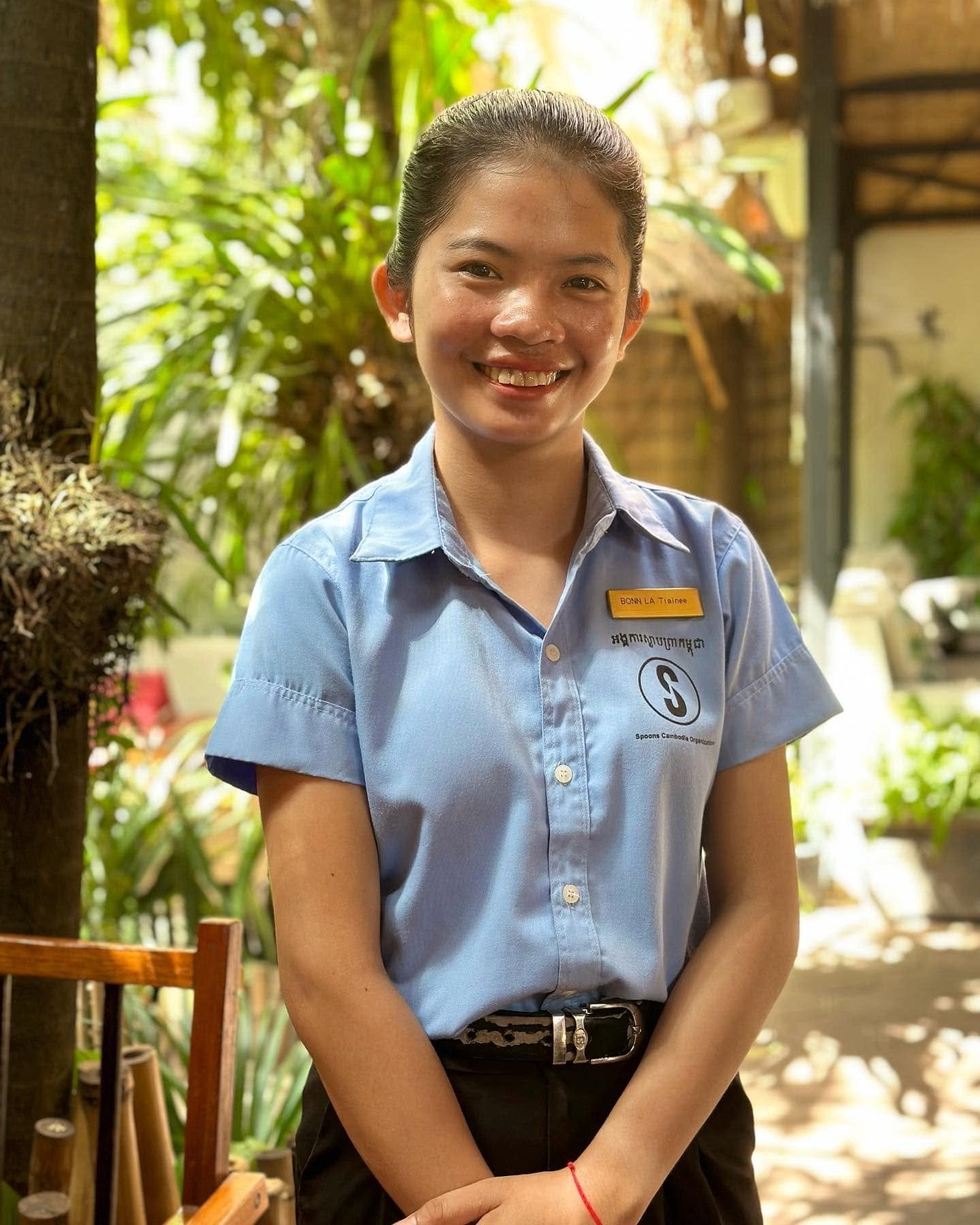
Bonn La, Spoons trainee — photographed in the Babel garden during her internship
Every year, one to three students from Spoons — a Cambodian hospitality training organisation for disadvantaged youth — come to Babel for a 10-week internship. They work in our restaurant, kitchen, and front office. Some of the best moments at Babel happen during these internships. Our staff keep in touch with former interns who have gone on to careers in Phnom Penh and the islands. Spoons told us last year that Babel is always a first choice for their students — they chose us over Raffles. We are still quietly proud of that.
Why Cambodia — not just Siem Reap

Cambodia is still healing. Every responsible business here is part of that rebuilding
Responsible tourism in Cambodia is not just about the hotel you stay in. It is about understanding the country you are visiting.
Cambodia is still healing. The Khmer Rouge era wiped out an entire generation of educated, skilled, and creative people. The country has been rebuilding for less than 50 years. Every business that pays fairly, trains honestly, and invests in its community is part of that rebuilding.
At Babel, we feel the weight of that every day — and the privilege of being part of it.
When you choose to stay with us, your money does not disappear into a corporate headquarters somewhere far away. It stays here. It pays salaries, funds scholarships, supports local suppliers, and flows into the community that makes Siem Reap worth visiting in the first place.
Is Babel the most responsible hotel in Cambodia?
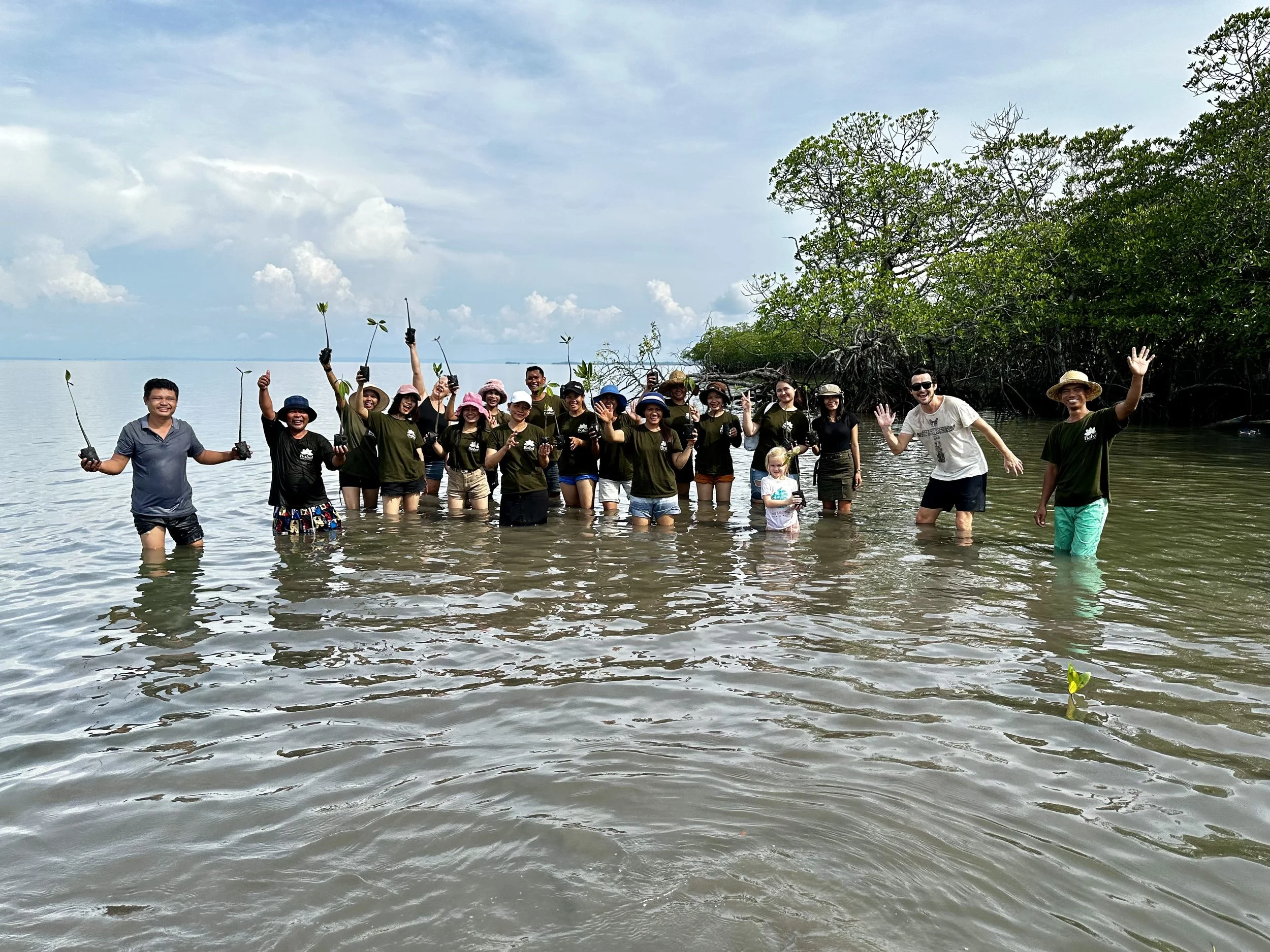
The Babel team planting mangroves in the south during the annual staff trip — because responsible tourism goes beyond our walls
We genuinely don't know — and we are a little suspicious of anyone who claims that title with confidence.
What we do know is that we have been doing this work, quietly and consistently, for well over a decade. We have made mistakes along the way and learned from them. We have staff who have grown with us. We have guests who come back year after year because they trust us. And we have a community around us that we love and feel genuinely responsible for.
That feels like enough.
Come and stay with us. See for yourself.