Off the Beaten Track: Our Insider Tips for Cambodia's Wild Side
We get asked this question quite often: "We've seen Phnom Penh, and we loved our stay here in Siem Reap — we're sad to leave, but we still have another week or so in Cambodia. What now?"
And almost every time, the answer people expect from us is Kampot, Kep, or the islands. It's the default. And don't get me wrong — all three of those places are absolutely well worth it. But after nearly two decades living and working in this country, we'd love for you to consider a different route — one that shows you a Cambodia most visitors never see.
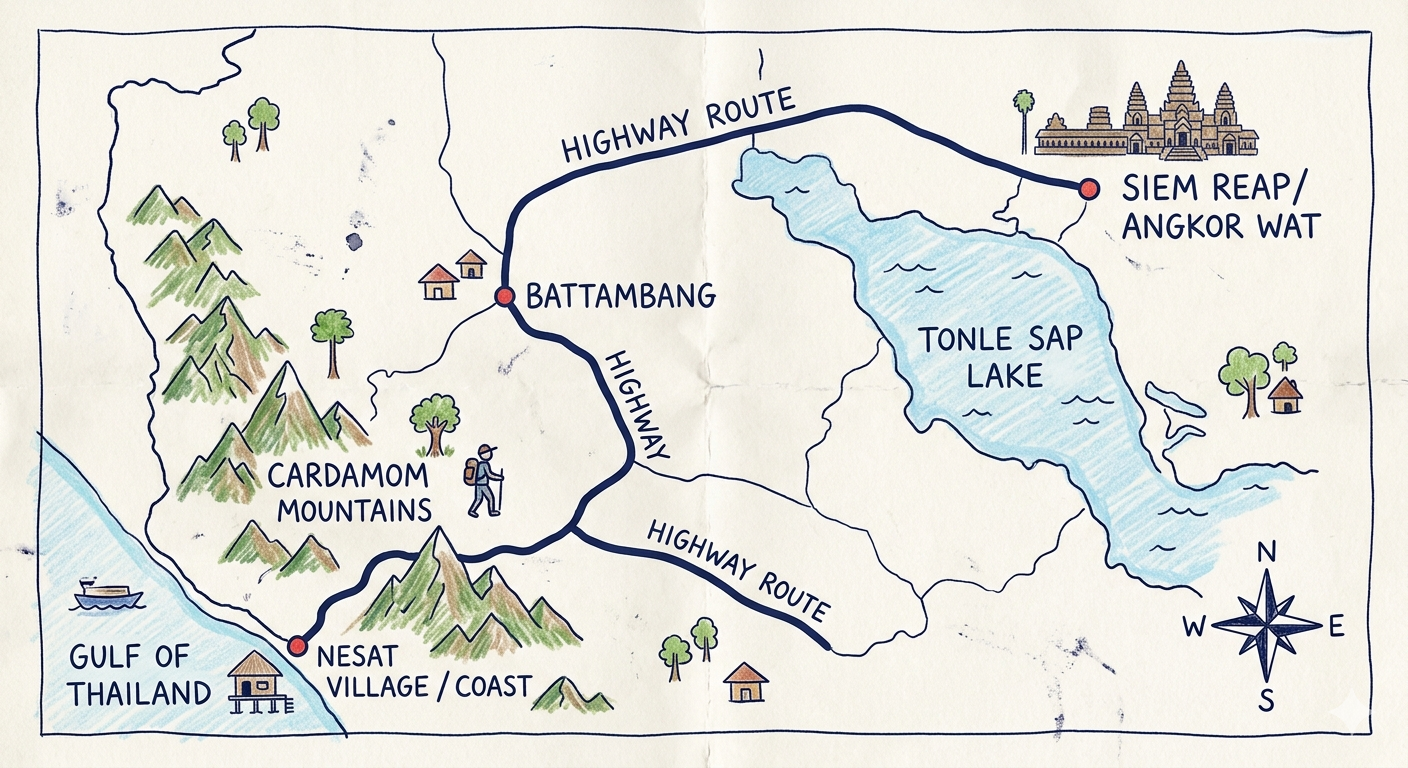
Siem Reap to the Cardamoms to Nesat Village and the coast - off the beaten track, just how we love it
The Cardamom Mountains: Cambodia's Wild Side
If you'd asked us five years ago, we probably wouldn't have sent you here. The roads simply weren't good enough, and the trip wasn't worth the discomfort for most travelers.
That has changed.
National Road 55 (the Cardamom Road) opened in 2020, connecting Pursat to the Thai border through Veal Veng. National Road 10 followed in 2025, linking Battambang to Koh Kong straight through the heart of the Cardamoms — home to the country's highest bridge.
Together, these two roads have quietly turned a remote, difficult-to-reach wilderness into a genuinely doable add-on to a Cambodia itinerary. It's one of the most rewarding shifts we've seen in Cambodian travel in years.
We work with a handful of reliable, safe, English-speaking long-distance drivers, and we're happy to arrange one for you if you'd like to make this trip. It means you're in good hands the whole way, and can stop exactly where you like.
Heading towards the Cardamoms, a stop in Battambang is well worth building into your route — even if it's just for a day, or one night. It's a relaxed, charming city in its own right, and a natural place to break up the journey between Siem Reap, the mountains and the coast.
From Battambang, it's about a 3-hour climb from the flat rice fields into the jungle peaks to Veal Veng and Osoam — a good halfway stop where you can stretch your legs, grab a Khmer lunch, and enjoy the cooler mountain air. All in, the drive from Battambang to Nesat Village on the new mountain highway takes around 7 hours. But do consider spending a few nights in one of the eco lodges on the mountain. This is where youll see the untouched Cambodia.
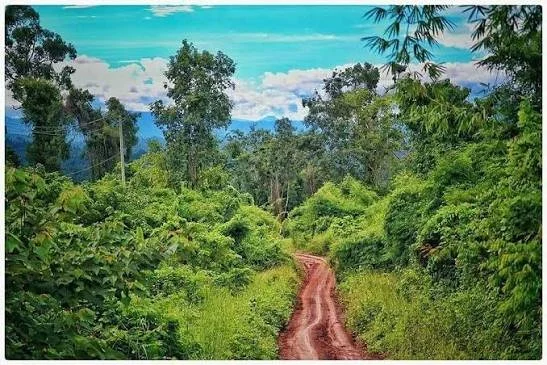
Where the road runs out and the real Cambodia begins
This is rainforest, not ruins. Multi-day hikes through some of the last intact wilderness in mainland Southeast Asia. Wildlife you won't find anywhere near Angkor — from elephants to Asiatic black bears to hundreds of bird species, many found nowhere else on Earth. And a genuinely good story behind who's showing you around: many of the local guides now leading hikes and camping trips through these forests are the same people who once made a living illegally logging them. As ecotourism has grown, among both local and international travelers, it's created real, viable work protecting the forest instead of cutting it down. Walking through the Cardamoms with one of these guides isn't just a hike — it's a look at what conservation can actually look like when it's built around people, not just policy.
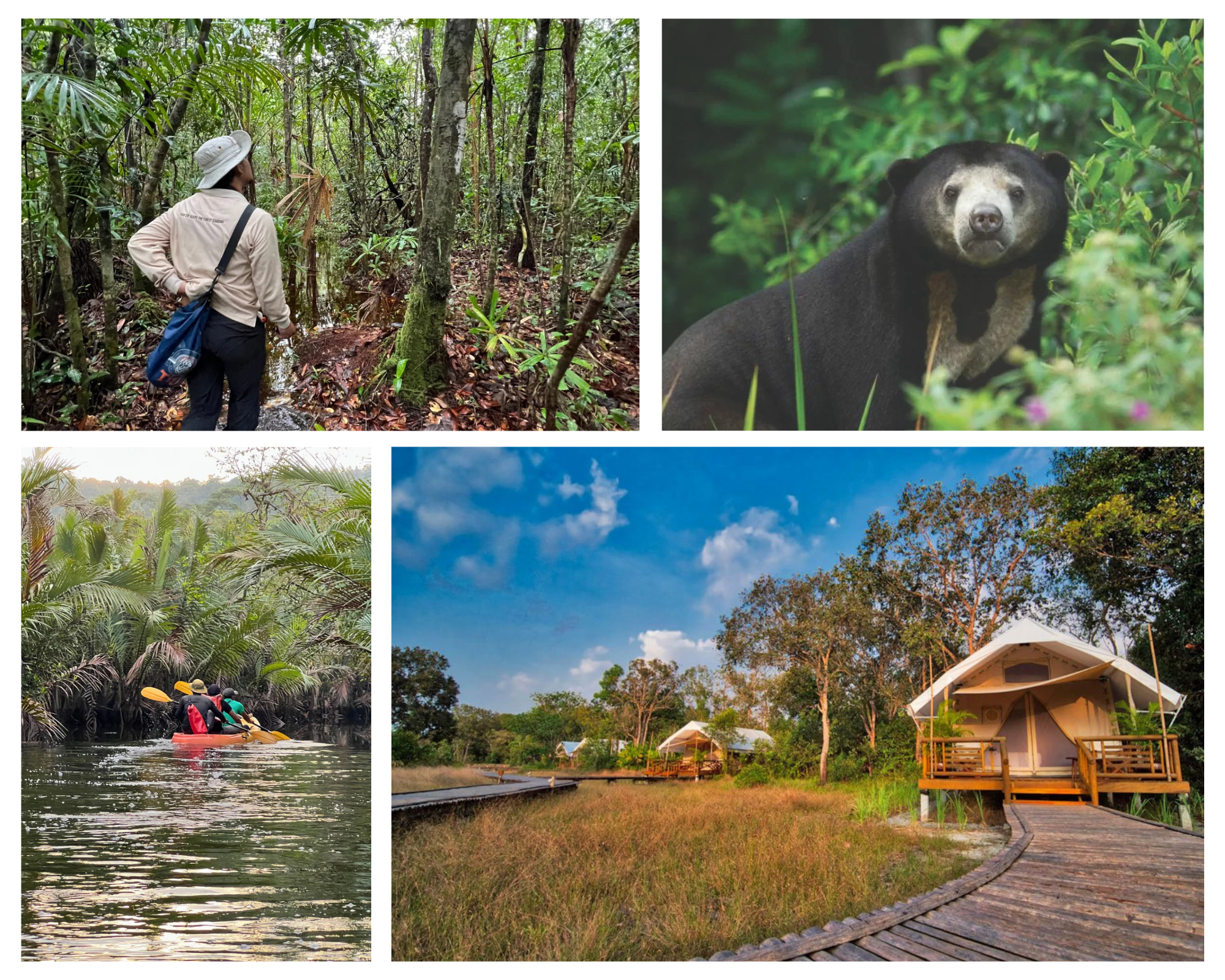
Deep in the Cardamoms, where the jungle still runs wild
Nesat Village: A Creative Village in the Jungle
Further south, on the coast, you'll find Nesat Village — a small, creative community that's grown into a genuine mix of locals and expats building something together. It's within this village that our owners, Katrine and Simen, have been working on Garden of Edens: a project of hand-built aircrete domes, an eco-conscious construction method that's been getting real attention online for how it looks and how it's made. Two domes are up so far. It's still taking shape, and not yet open for guests to stay. But do make sure to follow the progress on Instagram.
Garden of Edens reflects exactly the values Babel has always stood for: building thoughtfully, working with the local community, and leaving a place better than we found it.
If you're curious about sustainable building, or simply want to see a quieter, more creative stretch of Cambodian coastline, Nesat Village is well worth the detour.
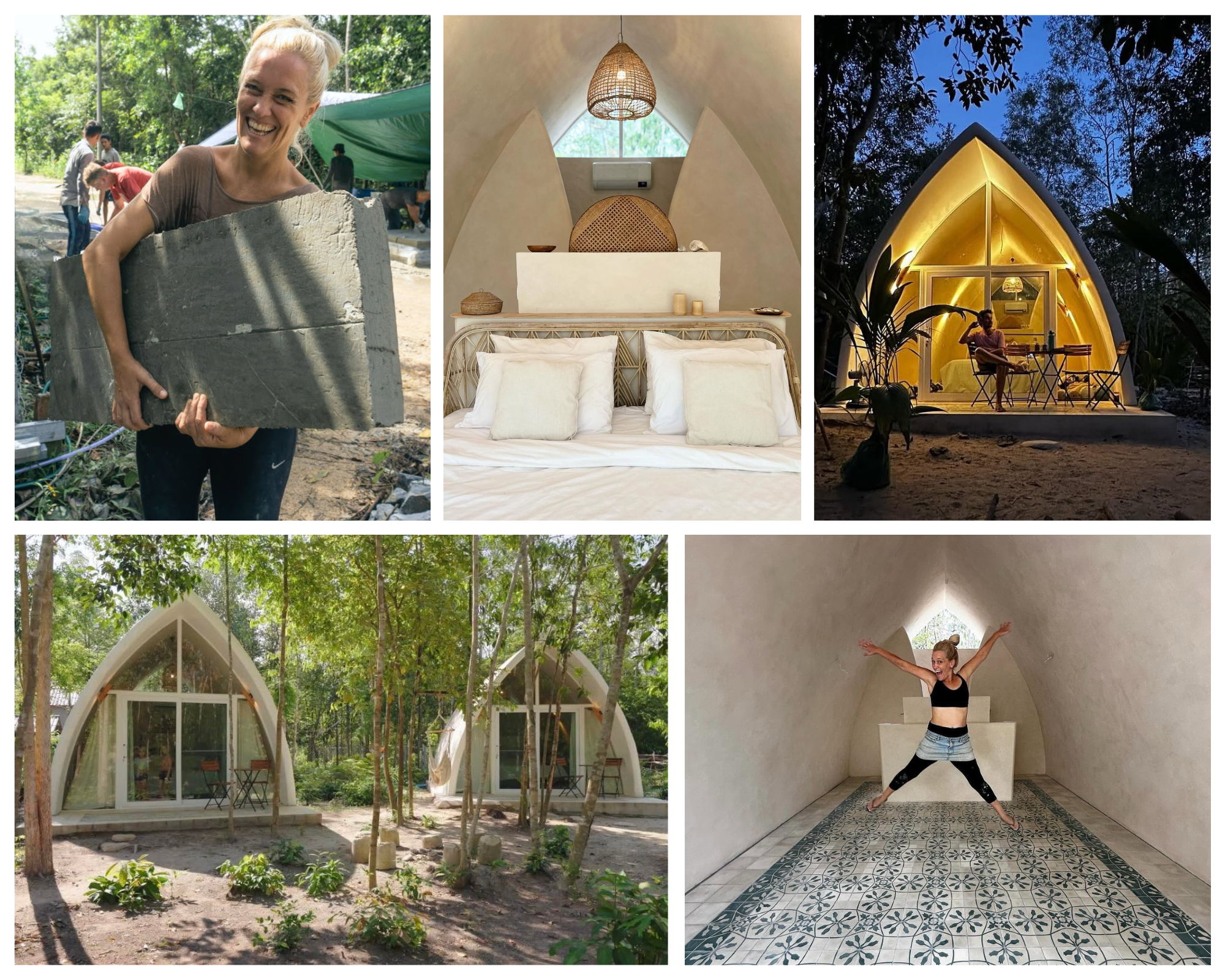
Building Garden of Edens, dome by dome, in Nesat Village
One important note on timing: Nesat Village is best visited during the dry season, roughly November to April. Many businesses in the village are seasonal and close for around six months during the heaviest rains, and only a handful of year-round residents keep things open through the wet months. If you're planning a visit outside the dry season, check ahead — you'll find full details, including accommodation, food, and events, on Nesat Village's own website.
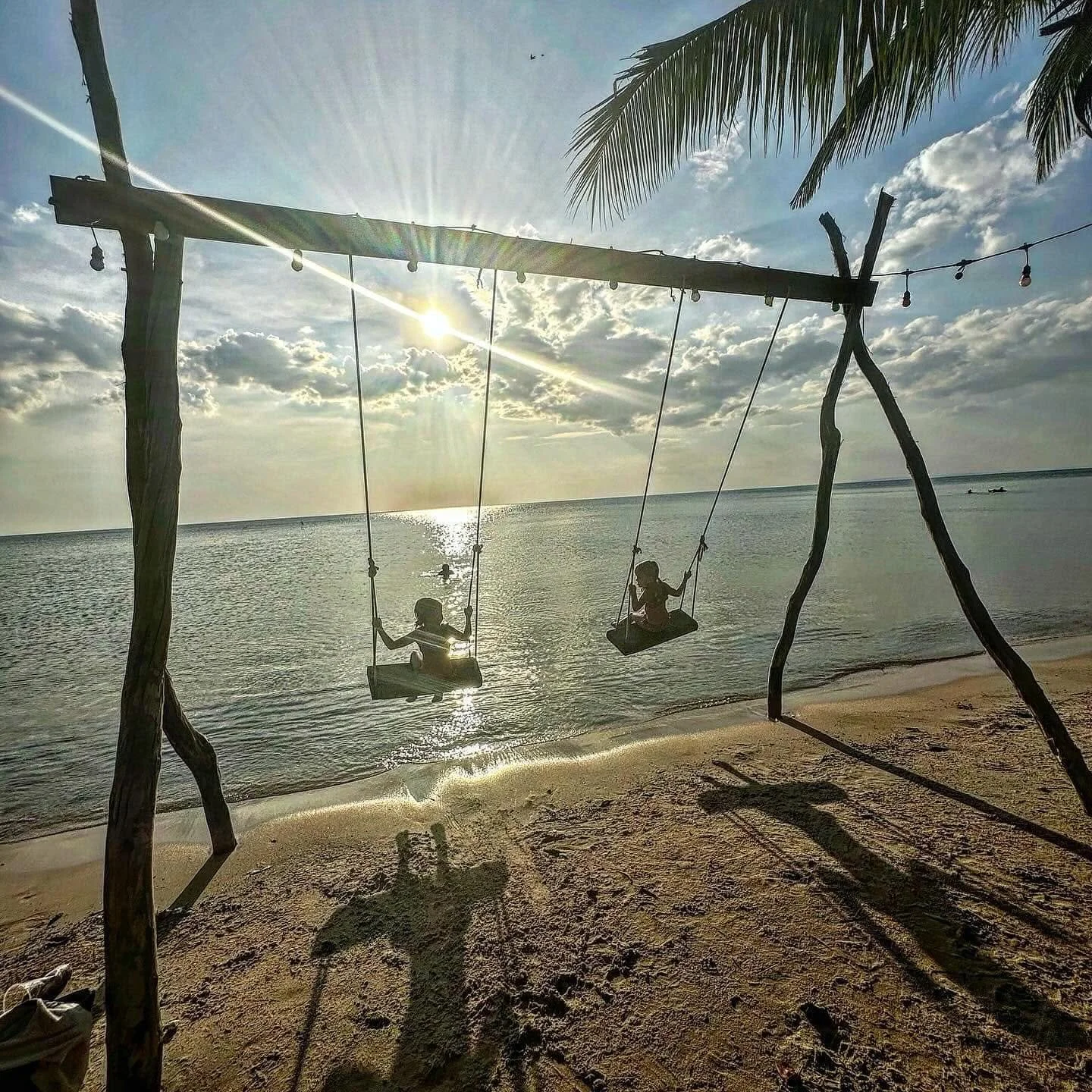
Some sunsets are just perfect. And on Nesat beach you’ll find them
The Route Matters as Much as the Destination
For us, this was never just about where you sleep. It's about how you move through a country — which roads you take, which communities you spend money in, and whether your trip supports places that need it as much as the ones already on every map.
Cambodia has a lot more to offer than the well-worn path between Siem Reap, Phnom Penh, and Kampot. Go where the road is newer, the guides used to be loggers, and the villages still close for the rain. That's the Cambodia most people fly home without ever seeing.
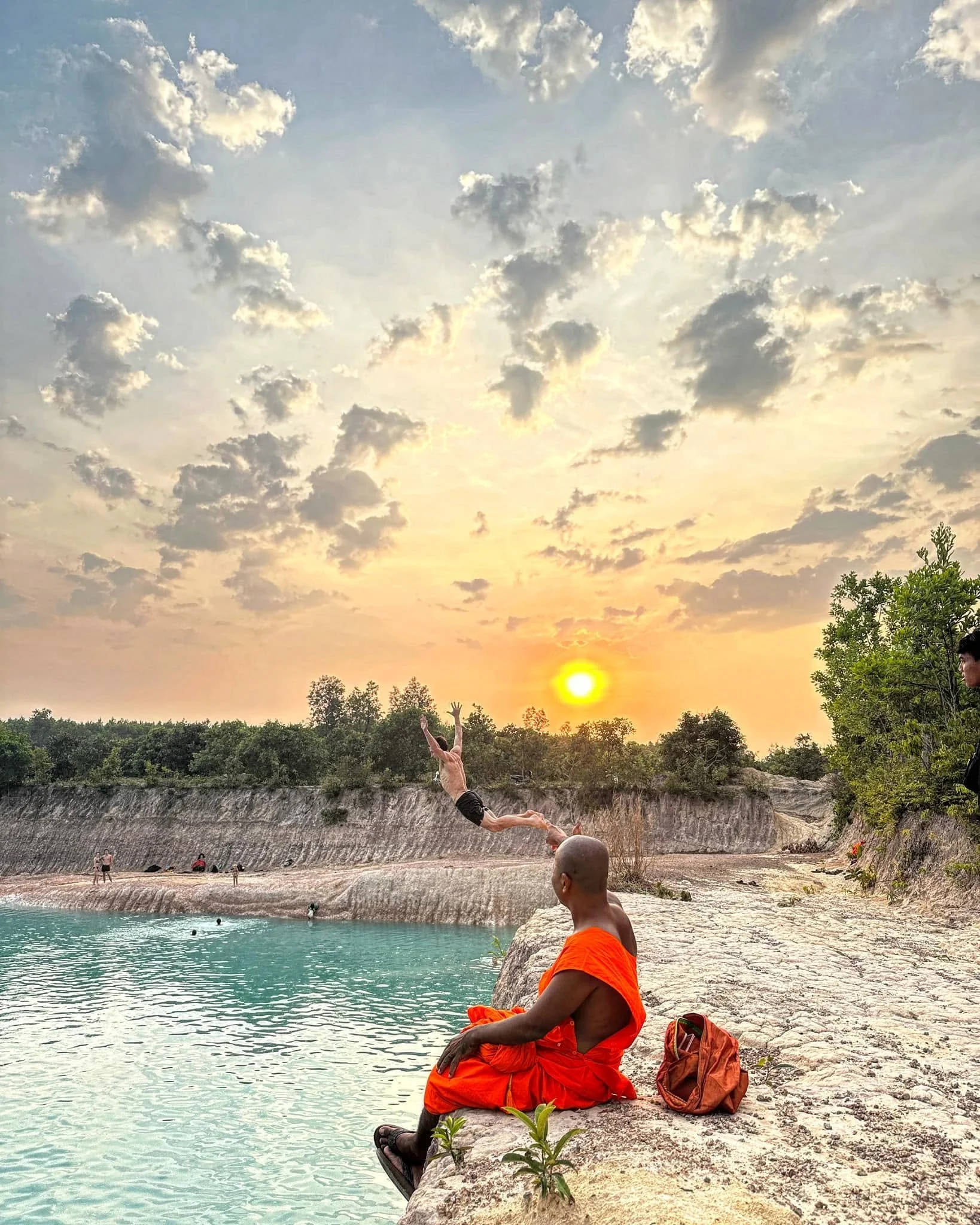
The kind of moment you can't plan for
Have questions about planning this route? Reach out through our contact page — messages there come straight to me, Siri, or to Katrine and Simen, and we'll get back to you personally within a day. Our team at the front desk can also help with the logistics once you're ready to go.
This is the Cambodia we fell in love with — go find your own version of it.